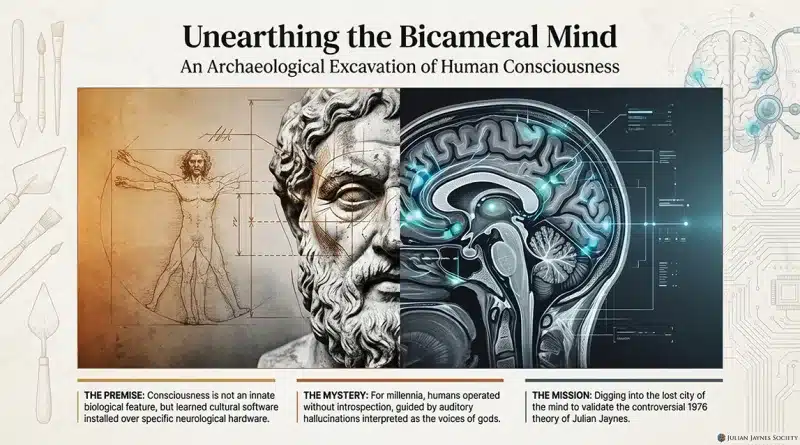
Unearthing the Bicameral Mind
THE PREMISE: Consciousness is not an innate biological feature, but learned cultural software installed over specific neurological hardware.
Read More
Posts related to Julian Jaynes’s theory of the origin of consciousness and the bicameral mind.
THE PREMISE: Consciousness is not an innate biological feature, but learned cultural software installed over specific neurological hardware.
Read MoreJulian Jaynes’s Ideas on Consciousness and the Self Let’s start with a question that sounds, well, it sounds super simple:
Read MoreJulian Jaynes’s Groundbreaking Ideas Explained in Just 16 Minutes Today, we are diving headfirst into one of the most profound,
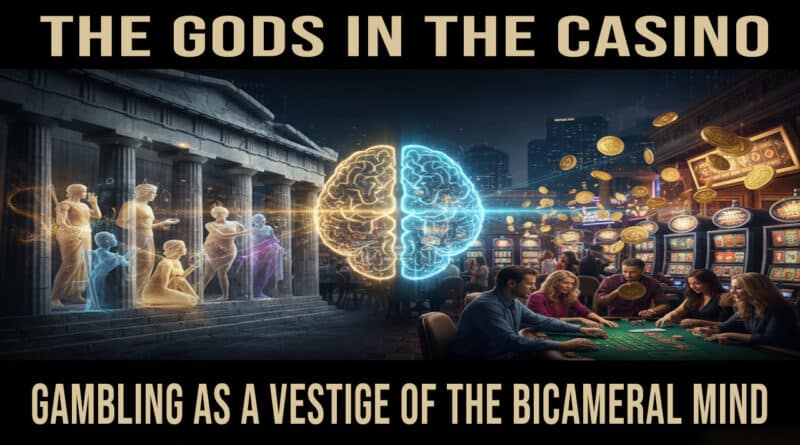
Read MoreFew activities are as paradoxical as gambling. Rationally, people know that casinos, lotteries, and betting houses are designed to favor the house. Yet the thrill of risking money on a throw of dice or the spin of a wheel remains irresistible to millions. Why?
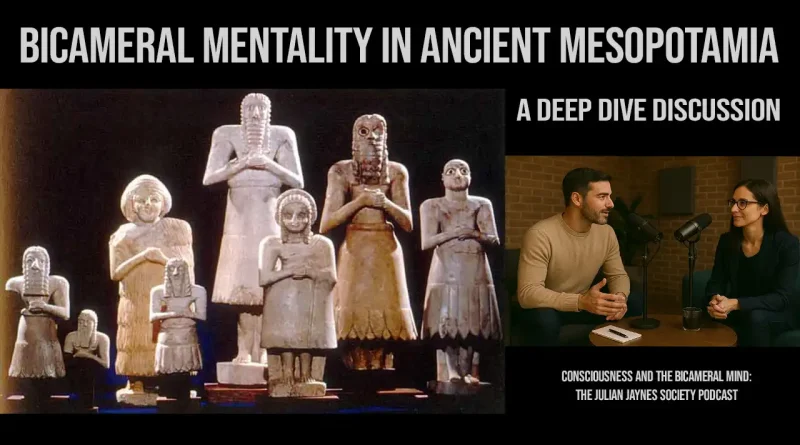
Read MoreWelcome to another deep dive where we plunge into ideas that fundamentally reshape our understanding of the human experience. It’s great to be back. Today we’re not just dissecting ancient history, we’re really embarking on an extraordinary intellectual journey, you know, excavating the very fabric of human mentality itself. Our lens for this profound exploration is the groundbreaking, and frankly, revolutionary theory of Julian Jaynes. Absolutely. A game-changer. And we’re setting our sights on one of history’s most enigmatic and foundational periods, ancient Mesopotamia.
Read MoreWelcome back to the Deep Dive, where we plunge into fascinating source material to unearth the most compelling insights, just for you. Glad to be diving in. Today we’re tackling something truly monumental. I mean, a theory that really challenges almost everything we thought we knew about the human mind and its history. Absolutely. It’s a big one. We’re embarking on an extensive deep dive into Julian Jaynes’ groundbreaking work, The Origin of Consciousness in the Breakdown of the Bicameral Mind.
Read MoreBoard games apparently came up in the second half of the fourth millennium BCE. Although several stone boards with small holes found at various sites in Jordan and elsewhere and dating to Neolithic times …
Read MoreIt is possible (advisable?) to strip away all the variations, dissimilarities, and kaleidoscopic richness and search for major patterns in world religions? Of course, the question in the social sciences, ever since they took shape since the Enlightenment, has been “are there universal, uniform, and unchangeable deep truths about human nature buried under the messy, unique particulars of place and period?” Each discipline contouring the current intellectual landscape differs depending on how they characterize the human condition, i.e., as something either defined by commonalities or differences. …
Read MoreSummary: “Consciousness and Dreams” by Marcel Kuijsten delves into Julian Jaynes’s theory regarding the relationship between dreams and the development
Read MoreClaiming that Bronze Age peoples lacked the internet, supercomputers, and lunar orbiters as well as the scientific know-how to construct such technological marvels is not controversial. And no one would be offended by the claim that these ancient peoples lacked the linguistic terminology that underwrites the knowledge base upon which rests the impressive wonders of human ingenuity. …
Read More